
SUN TZU: THE ART OF WAR IN THE 21ST CENTURY
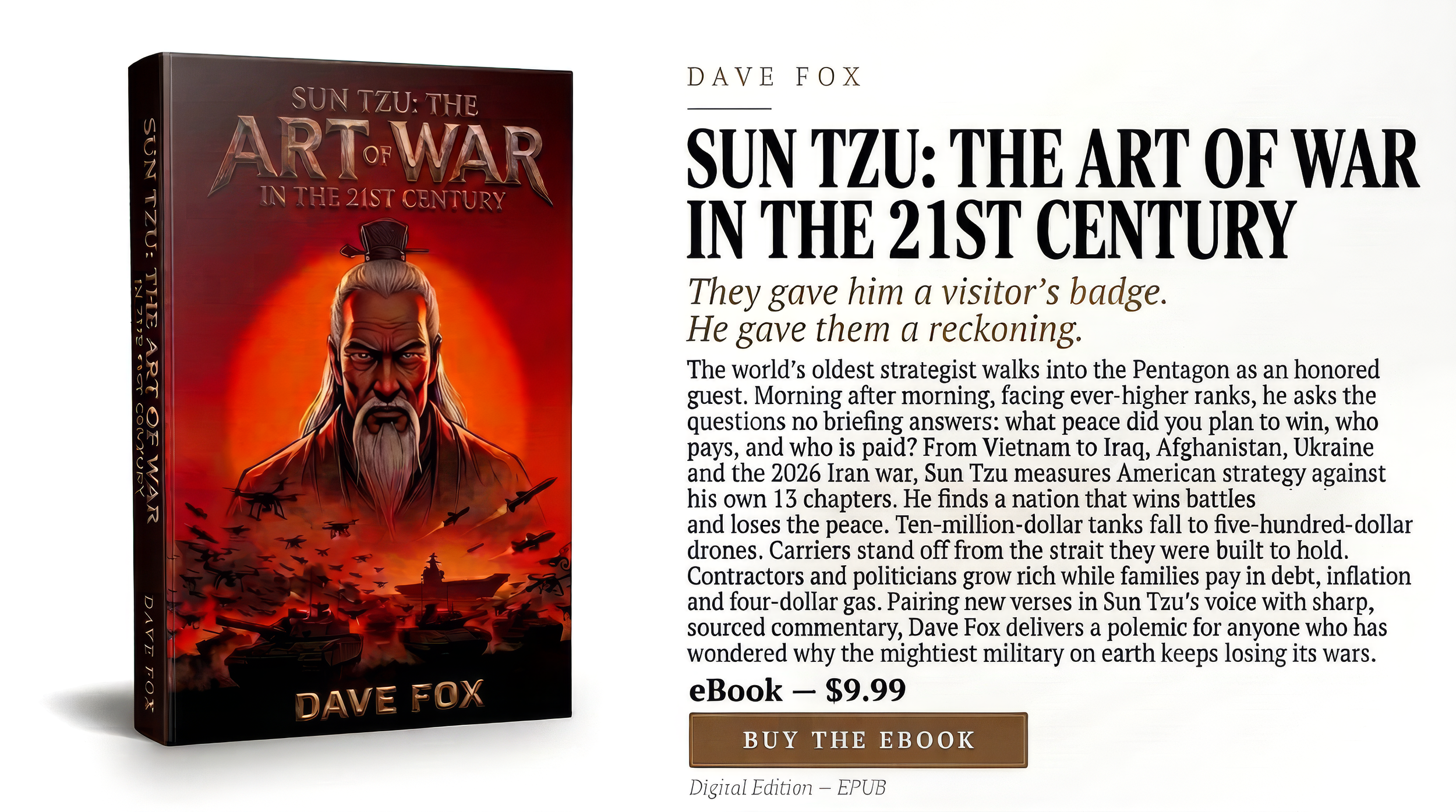
SUN TZU: THE ART OF WAR IN THE 21ST CENTURY
America wins the battles. Sun Tzu came to ask who wins the peace.
Twenty-five centuries ago, a Chinese general wrote thirteen short chapters on war. Generals, presidents and CEOs have studied them ever since. Now the author himself is escorted through the River Entrance of the Pentagon as an honored guest, with a visitor’s badge on his sleeve and a question for everyone he meets.
He stops at a model aircraft carrier and asks what it costs. About thirteen billion dollars, he is told, before the aircraft. And the weapon the enemy sends against it? Some drones cost about as much as a family car. “You must be very rich,” he says. “Who pays?” The taxpayers. “And who is paid?” No one answers.
That question drives this sharp, fast-moving polemic. Morning after morning, Sun Tzu faces higher ranks: staff officers first, then three-star generals, then four-star admirals in a guarded room. He holds America’s record since 1945 against his own thirteen chapters. The officers argue back hard, and when they are right, he concedes. When they are wrong, he says so plainly.
The verdict is hard to hear. The United States has fielded the largest, most expensive military in history, and it keeps winning battles and losing the peace. Vietnam ended with helicopters on an embassy roof. Iraq handed influence in Baghdad to Iran. Afghanistan ended where it began. In the 2026 Iran war, million-dollar interceptors chase drones that cost a few thousand. Ten-million-dollar Abrams tanks fall to drones that cost five hundred. Carriers stand off from the very strait they were built to keep open. Iran answers each strike by hitting the world’s energy supply and the economies of the Gulf states that host American bases.
Behind every failure, Sun Tzu finds the same incentives. Contractors, consultants, politicians and foreign patrons do well from wars that never end. Fox documents how it works: a Boeing tanker lease that sent a Pentagon official to prison, and tanks the Army said it did not need, built anyway because Congress kept paying for them. Ordinary families pay the bill in borrowed money, rising prices and gasoline at $4.15 a gallon on Election Day. In November 2026, voters sent their own verdict.
Each chapter pairs new verses written in Sun Tzu’s voice with commentary grounded in the public record, in the tradition of the classical commentators who annotated The Art of War for two thousand years. The book ends with four plain remedies: write the peace down on one page before the first strike, attach a tax to every war, slow the revolving door, and ask three questions before stationing a single soldier abroad.
Short, pointed and impossible to put down, Sun Tzu: The Art of War in the 21st Century is for veterans and military professionals, readers of strategy and history, and every taxpayer who has wondered why the mightiest military on earth keeps losing its wars.